
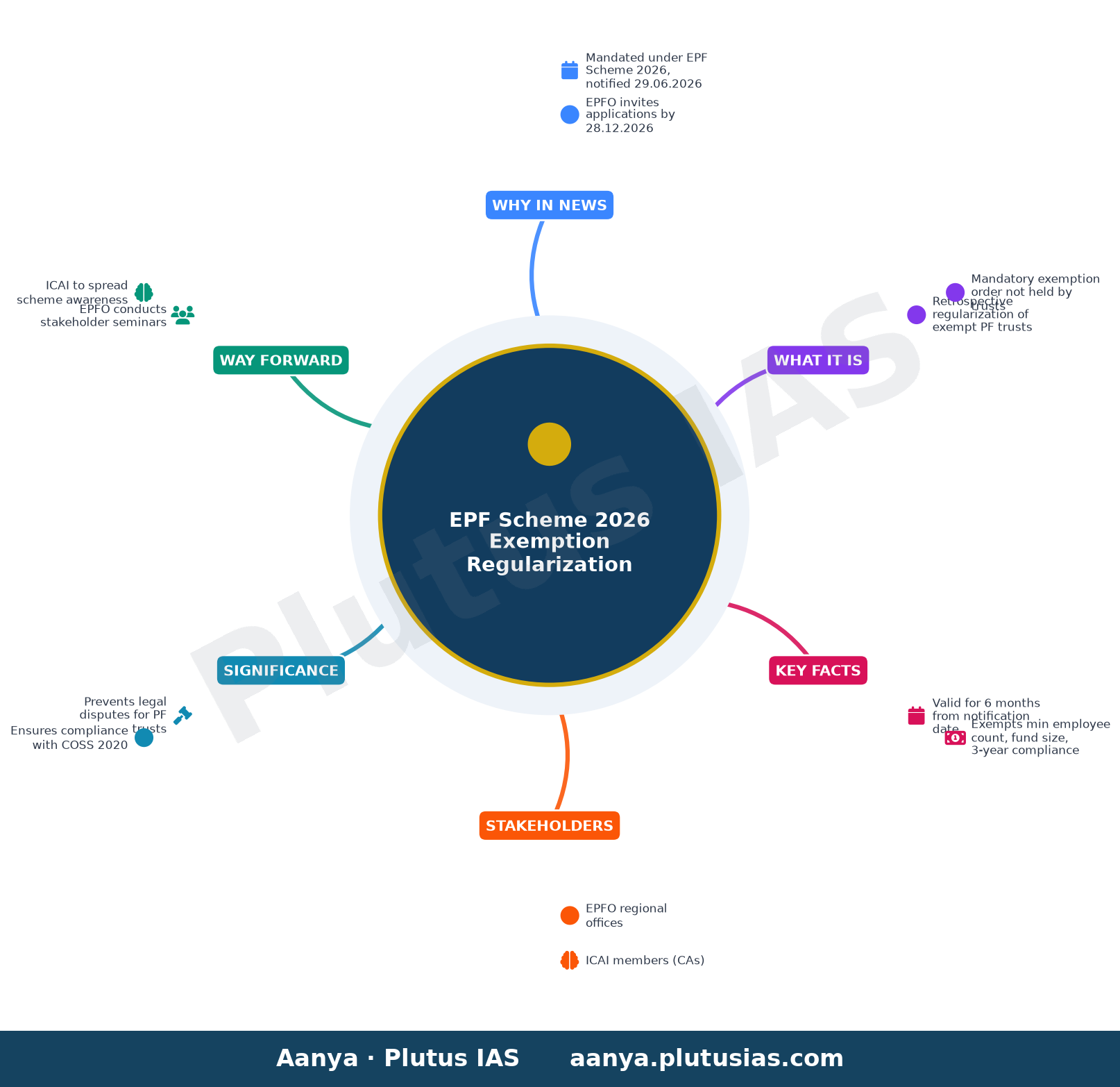
✎ EPF Scheme 2026 offers retrospective regularization for exempt PF trusts by 28.12.2026 under notified provisions.
Relevance for Banking, SSC & RBI Grade B exams: Polity & Governance
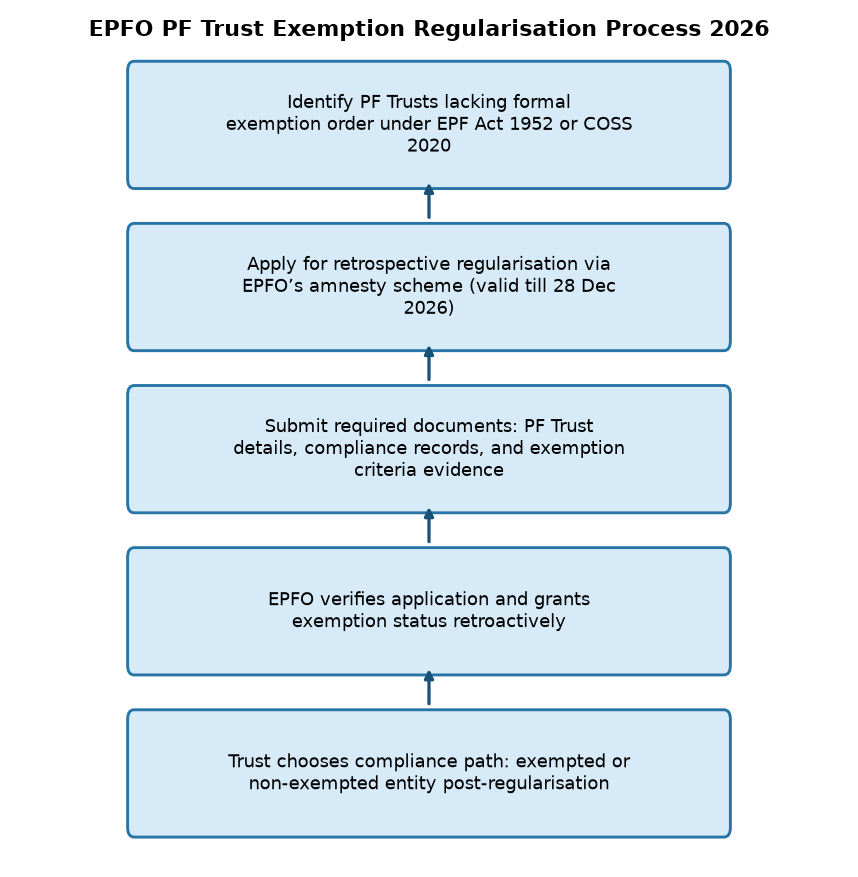
The Employees’ Provident Fund (EPF) Scheme 2026 introduced one-time waiver provisions on 29 June 2026 to retrospectively regularise the exemption status of provident-fund trusts recognised under the Income-tax Act, 1961 but lacking formal exemption orders under section 17 of the EPF & MP Act, 1952 or section 143 of the Code on Social Security, 2020. These provisions, valid until 28 December 2026, offer relief from minimum employee-count, fund-size and three-year compliance norms under COSS 2020, and let establishments choose post-regularisation whether to remain exempt or non-exempt. The EPFO has issued detailed operational guidelines on 11 July 2026 and is running outreach through regional offices, ICAI members who audit PF trusts, and stakeholder seminars to ensure maximum participation before the cut-off date.
For Banking, SSC and RBI Grade B aspirants, this scheme highlights the intersection of labour laws, taxation and social-security governance—a recurring theme in policy and current-affairs questions. Understanding the EPFO’s regulatory role, the interplay between the Income-tax Act and EPF & MP Act, and the procedural timelines (11 July circular, six-month validity) can help frame answers on statutory compliance, exemption mechanisms and retrospective legislation in exams. The emphasis on documentation, audit linkages (ICAI) and compliance deadlines also mirrors the analytical skills tested in descriptive papers and interview discussions.
Source: PIB (Press Information Bureau)
Generated by AanyaAi for educational purpose.

1 comment on “EPFO’s 2026 Amnesty Scheme for PF Trusts: Key Deadline & Benefits Explained”