
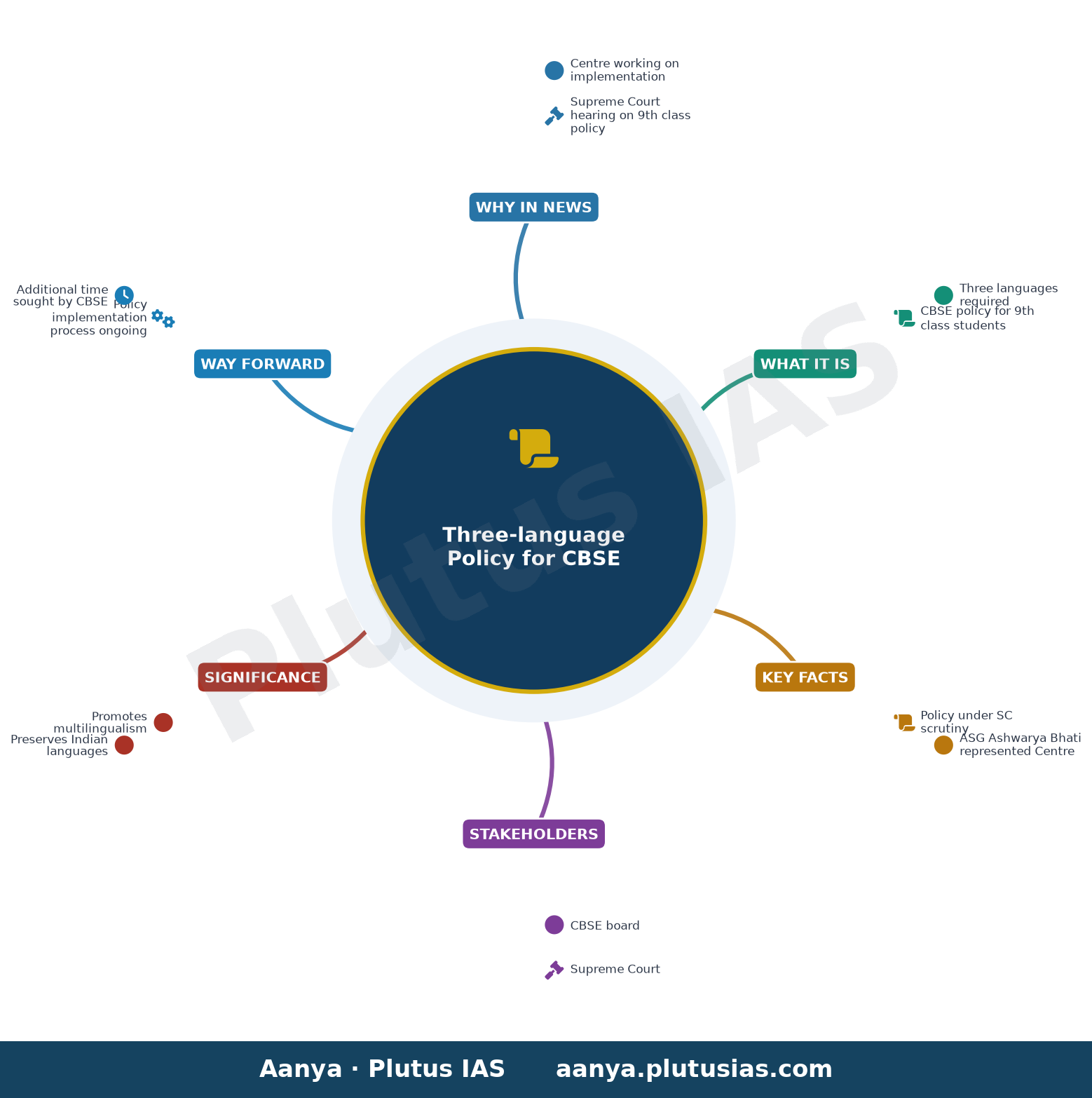
✎ CBSE's three-language policy for 9th class students is under Supreme Court review with Centre working on its implementation.
Relevance for Banking, SSC & RBI Grade B exams: Polity & Governance
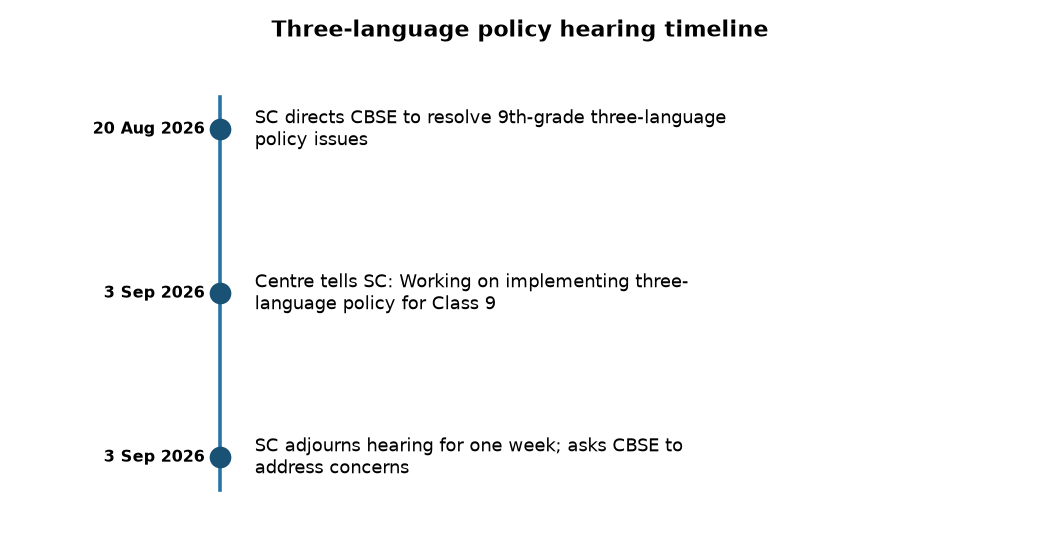
The Supreme Court on September 3, 2026, heard a case regarding the implementation of the three-language policy for Class 9 students, with the Centre informing the court that it is actively working on ways to implement the policy as suggested. The policy mandates that students must study three languages, including at least two Indian languages, aligning with the National Education Policy (NEP) 2020 and the National Curriculum Framework (NCF) 2023. The Additional Solicitor General, Aishwarya Bhat, informed a bench led by Justice Surya Kant that the CBSE is preparing the implementation process and requires additional time, following which the court adjourned the matter for a week. The Supreme Court had earlier emphasized the need to address concerns raised by petitioners regarding the policy’s execution, particularly ensuring adequate infrastructure and human resources for language options.
For Banking, SSC, and RBI Grade B aspirants, this development is relevant as it reflects the intersection of governance, education policy, and judicial oversight—key areas often tested in competitive exams. Questions may arise on the constitutional provisions related to education, the role of the judiciary in policy implementation, or the impact of NEP 2020 on national educational frameworks. Additionally, understanding the dynamics between the executive, judiciary, and statutory bodies like CBSE can be crucial for Polity and Governance sections in exams, where analytical and conceptual clarity is assessed.
Source: amarujala.com
Generated by AanyaAi for educational purpose.

1 comment on “Supreme Court Hears CBSE Three-Language Policy Challenge: Centre Updates on Implementation”