
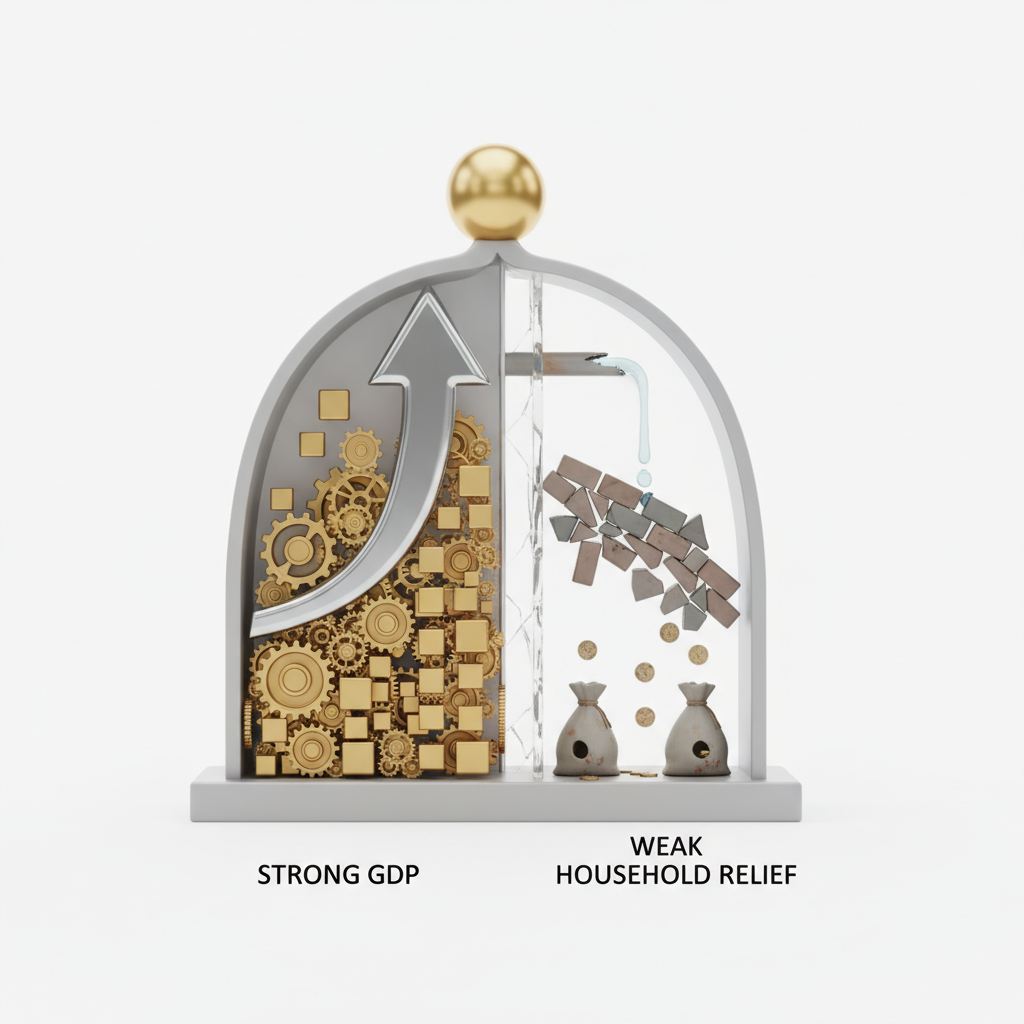
✎ Strong GDP growth must translate to household welfare and employment for inclusive development.
Relevance for Banking, SSC & RBI Grade B exams: Economy
India’s GDP growth of 7.8% in Q1 2026-27, as reported by MoSPI, highlights strong economic activity with rising investment, consumption, and exports. However, this headline figure masks deeper issues like unemployment, informal work, and weak household relief. For banking and SSC aspirants, understanding GDP’s limitations—focusing on production rather than distribution—is crucial, as exam questions often test the distinction between economic growth and welfare. RBI Grade B candidates must analyze how such disparities impact monetary policy, inflation, and financial inclusion, where weak household demand could signal structural economic challenges.
The PLFS 2025 data further underscores these concerns, showing a marginal decline in unemployment but persistent issues like high youth and urban joblessness, alongside low-quality employment. For banking exams, this highlights the role of formal job creation in credit growth and financial stability. SSC aspirants should note how such trends affect social security schemes and policy debates, while RBI Grade B candidates must link these labor market realities to inflation dynamics and rural-urban economic divides. The core lesson—GDP growth alone isn’t enough—is vital for framing policy responses in competitive exams.
Source: orissapost.com
Generated by AanyaAi for educational purpose.

1 comment on “India’s Q1 FY27 GDP Growth at 7.8%: Analyzing Employment & Household Relief Gaps”