
✎ NCSC investigates caste-based discrimination leading to IIT Bombay student's death, highlighting institutional safeguards and accountability.
Relevance for Banking, SSC & RBI Grade B exams: Polity
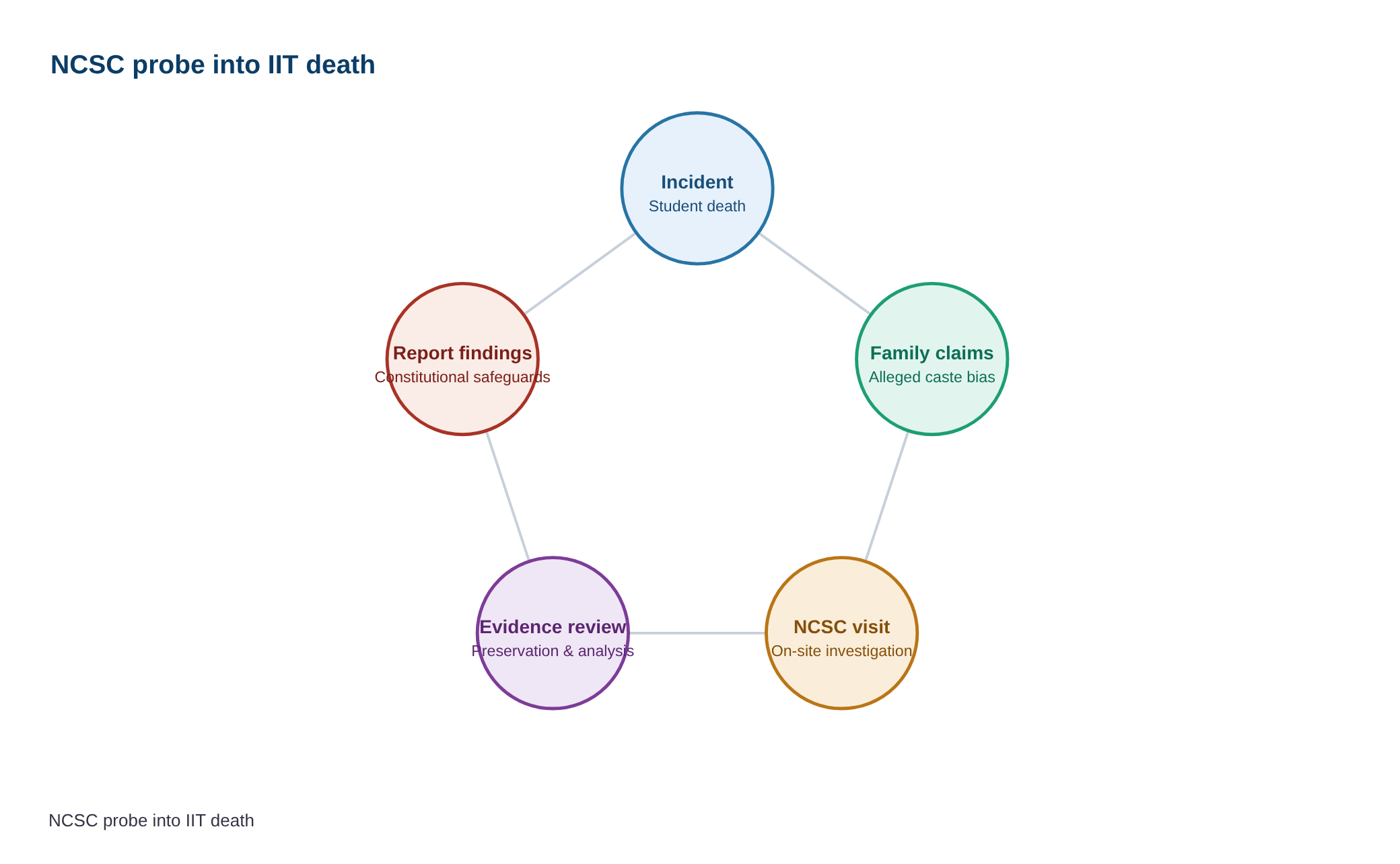
The National Commission for Scheduled Castes (NCSC), led by Chairman Kishor Makwana, conducted an on-ground investigation at IIT Bombay following the death of second-year B.Tech student Sahil Wakoade, a Scheduled Caste (SC) student. The visit followed allegations of caste-based discrimination and harassment prior to his death, prompting the NCSC to examine the circumstances surrounding the incident. The commission reviewed official records, including examination proceedings where Wakoade was allegedly implicated in malpractice, and interacted with faculty, administrators, and fellow students to gather firsthand accounts. Emphasizing the preservation of all evidence—such as CCTV footage, electronic records, and forensic data—the NCSC directed authorities to ensure a fair, transparent, and expedited investigation while upholding constitutional safeguards for SC members.
This case holds significant relevance for banking, SSC, and RBI Grade B examinations, particularly in the Polity and Governance segments. It underscores the role of constitutional bodies like the NCSC in addressing social justice issues and protecting marginalized communities. Candidates may encounter questions on the functions of such commissions, the constitutional provisions for SC/ST welfare, or the mechanisms for grievance redressal in institutions. Additionally, the incident highlights the importance of institutional accountability, ethical governance, and the intersection of social justice with higher education policies, making it a pertinent case study for aspirants preparing for exams that test awareness of current affairs and governance frameworks.
Source: PIB (Press Information Bureau)
Generated by AanyaAi for educational purpose.

1 comment on “NCSC Chairman Investigates SC Student’s Death at IIT Bombay: Key Facts for Exam”