
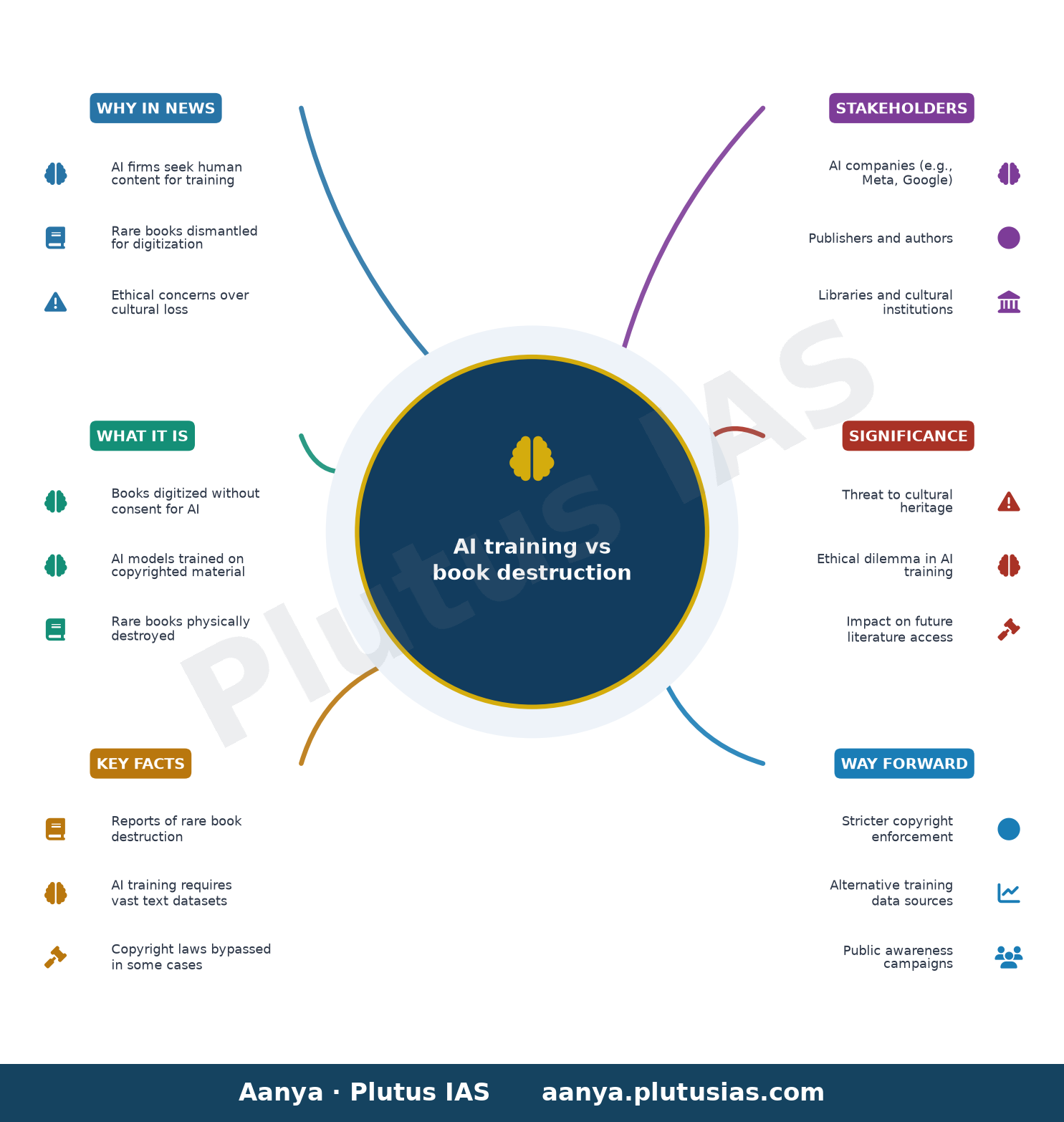
✎ AI training threatens cultural preservation; ethical and legal frameworks must balance innovation and heritage.
 Physical booksAI training dataDigital archives
Relevance for Banking, SSC & RBI Grade B exams: Science & Technology
Books are being destroyed for training AI: A technological leap or a cultural loss? The practice of dismantling rare and antique books to digitize their content for artificial intelligence training has sparked a global debate. Reports indicate that AI companies are purchasing bulk quantities of books, scanning them at high speeds, and discarding the originals—raising ethical concerns about the irreversible loss of cultural heritage. While the process may be legally permissible in some regions, it strips books of their historical and emotional value, reducing them to mere data points for machine learning. The situation is further complicated by claims that even irreplaceable works with no surviving copies are being targeted, as pre-2022 books are preferred for their lack of AI-generated content. The ethical dilemma intensifies when considering that these books have survived wars, censorship, and time itself, only to be discarded in the name of technological progress.
This issue holds significant relevance for aspirants preparing for competitive exams like Bank PO, IBPS, SBI, RBI Grade B, and SSC, as it intersects with current affairs, ethics, and technology—key areas frequently tested. Questions on digital ethics, data privacy, and the societal impact of AI are common in these examinations, making this topic crucial for awareness. Additionally, understanding the balance between innovation and cultural preservation can provide valuable context for essay writing, interview discussions, and general awareness sections in these exams. The debate also touches upon broader themes like intellectual property rights and the role of technology in shaping human knowledge, which are often explored in descriptive and analytical questions.
Source: Times of India
Generated by AanyaAi for educational purpose.
