
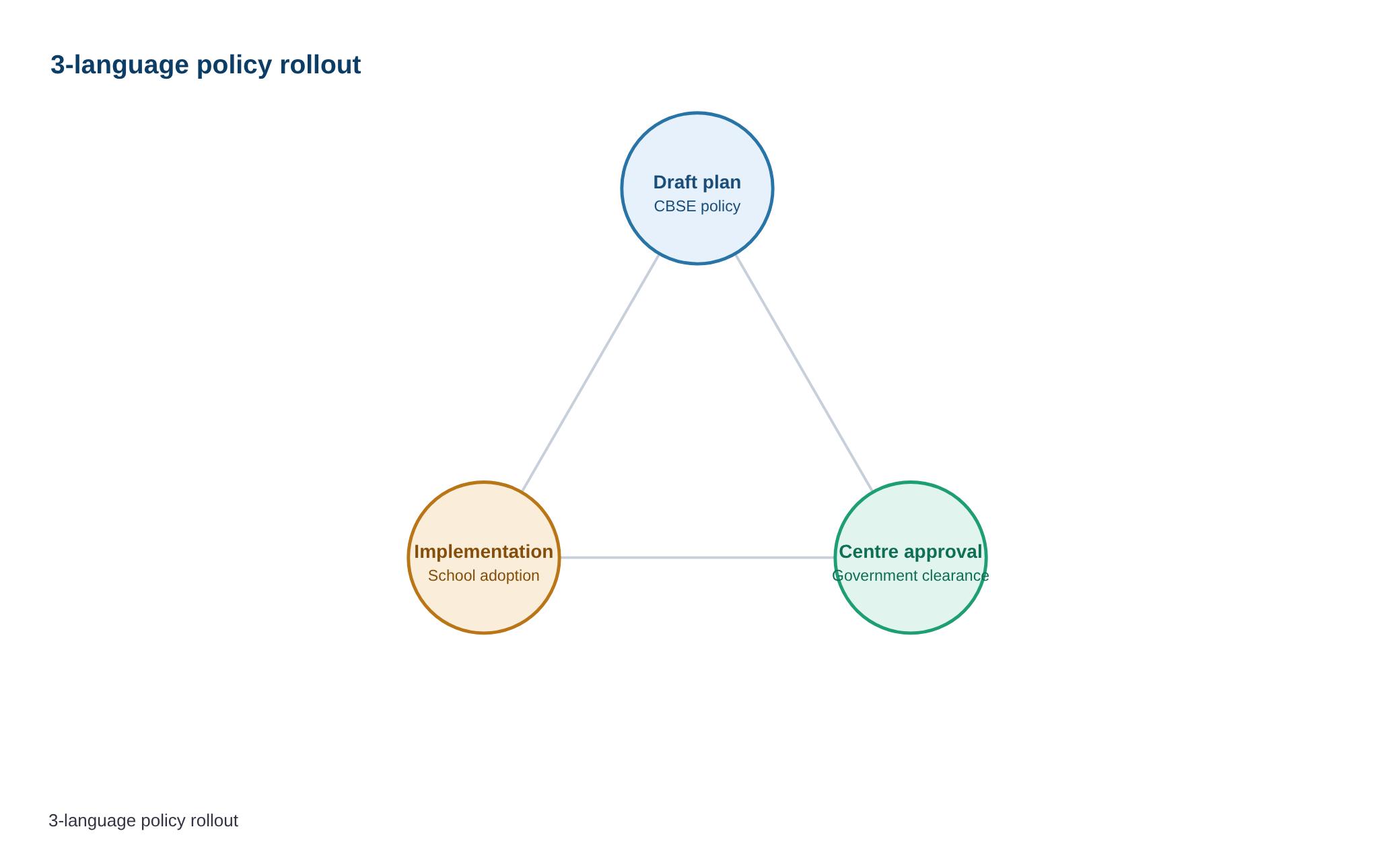
✎ CBSE’s 3-language policy aims to promote Indian languages while aligning with NEP 2020, but implementation requires addressing infrastructure and concerns.
Relevance for Banking, SSC & RBI Grade B exams: Polity & Governance
The Centre informed the Supreme Court on September 5, 2026, that it is actively developing an implementation plan for the CBSE’s three-language policy, which mandates Class 9 students to study two Indian languages and one additional language. The Additional Solicitor General, Aishwarya Bhati, apprised the bench led by Chief Justice Surya Kant that the CBSE is finalizing modalities to address concerns raised by petitioners regarding the policy’s rollout. The Supreme Court, while acknowledging the policy’s alignment with the National Education Policy (NEP) 2020 and the National Curriculum Framework for School Education 2023, emphasized the need to mitigate undue pressure on students and ensure adequate infrastructure for language options. The court deferred the matter by a week, seeking solutions to potential impediments in implementation.
This development holds significance for banking, SSC, and RBI Grade B exam aspirants as it reflects the interplay between education policies and governance, a recurring theme in the General Awareness sections of these examinations. Questions may arise on the NEP 2020’s objectives, the role of CBSE in policy execution, or the Supreme Court’s jurisdiction in reviewing such matters. Aspirants should note the policy’s emphasis on regional languages, which ties into India’s socio-cultural fabric—a topic often tested in exams. Additionally, understanding the Centre’s response to judicial scrutiny can provide insights into inter-institutional dynamics, crucial for questions on polity and governance.
Source: The Indian Express
Generated by AanyaAi for educational purpose.
