Relevance for Banking, SSC & RBI Grade B exams: Economy/Governance
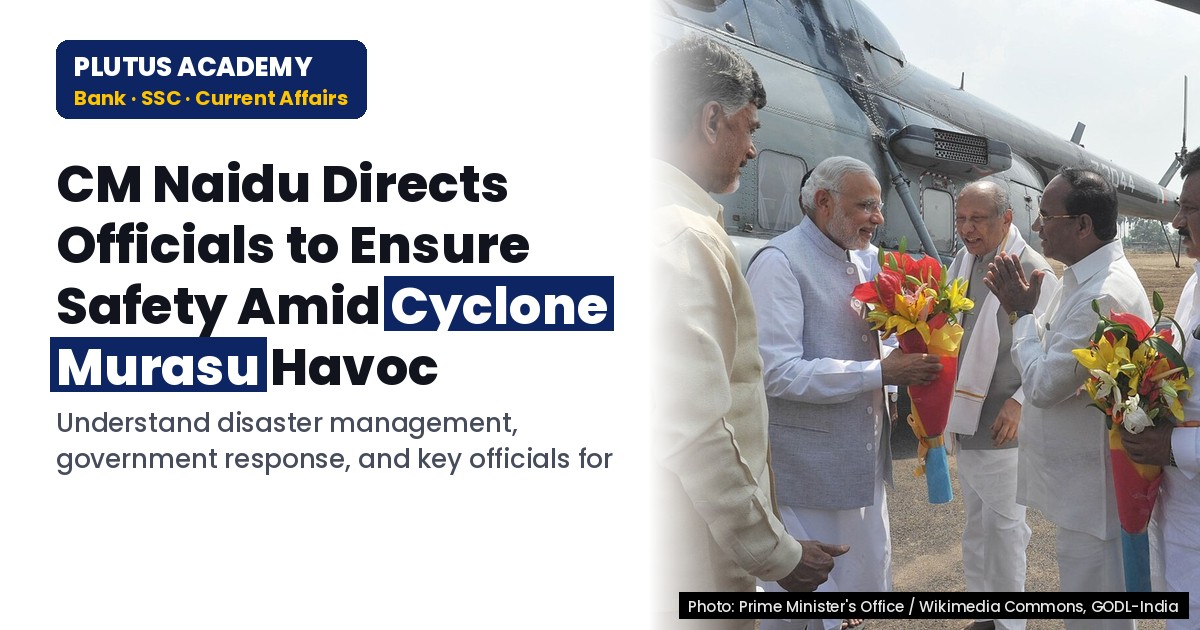
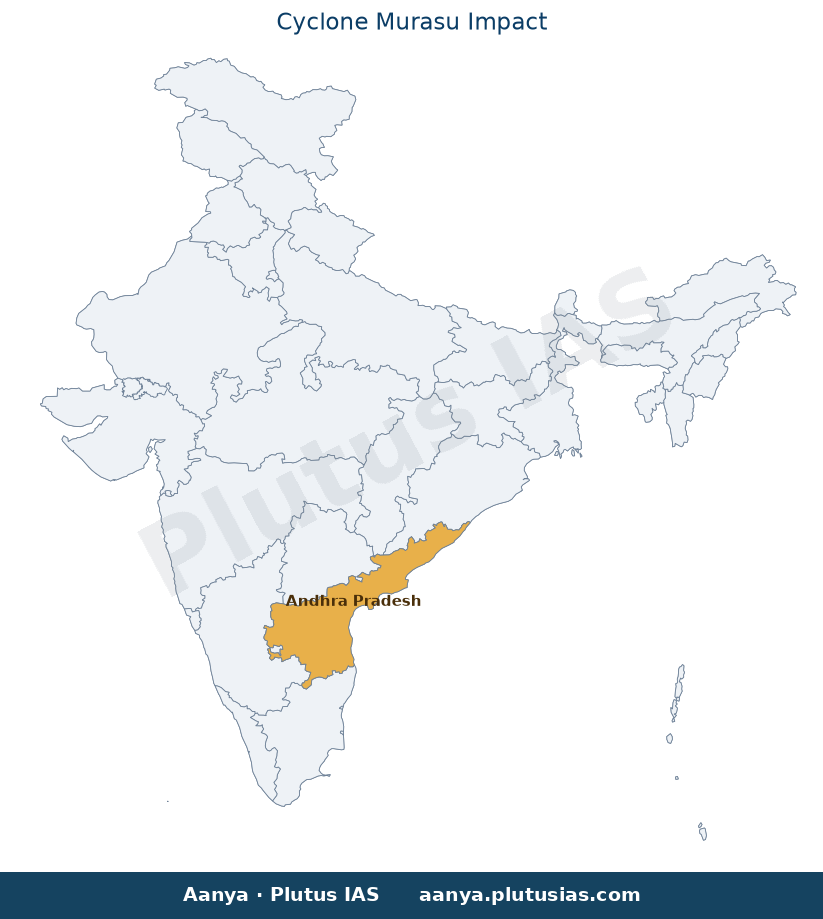
Cyclone Murasu, a severe cyclonic storm, has caused widespread destruction in coastal Andhra Pradesh, uprooting thousands of trees, damaging hundreds of electric poles, and wrecking fishing boats, with districts like Bapatla and Prakasam experiencing heavy rainfall and gusty winds. Despite the extensive damage to property and standing crops, energy department officials have reported no electricity poles falling and no disruptions to power supply anywhere, a significant achievement in disaster management. Andhra Pradesh Chief Minister N. Chandrababu Naidu directed officials to ensure people stayed indoors and took precautions to prevent loss of life and minimise property damage, while the Real Time Governance Society (RTGS) rolled out a dedicated grievance reporting mechanism through its ‘Mana Mitra’ WhatsApp Governance platform for citizens to report emergencies and civic disruptions.
For Banking, SSC, and RBI Grade B exams, this situation highlights crucial aspects of governance and economic resilience. The absence of power disruptions despite a severe cyclone demonstrates effective disaster preparedness and infrastructure management by the state’s energy department, which is vital for maintaining economic activity and public services during crises. The implementation of the ‘Mana Mitra’ WhatsApp platform by RTGS showcases the adoption of technology for efficient governance and disaster relief, a key area for assessing administrative effectiveness and citizen-centric services. Furthermore, the economic impact of damaged crops and property, alongside the state’s efforts to mitigate these losses, provides a practical example of disaster economics and the role of government intervention in post-disaster recovery, all relevant for understanding macro and microeconomic implications of natural calamities.
Source: The Hindu
Generated by AanyaAi for educational purpose.
