
Relevance for Banking, SSC & RBI Grade B exams: Economy
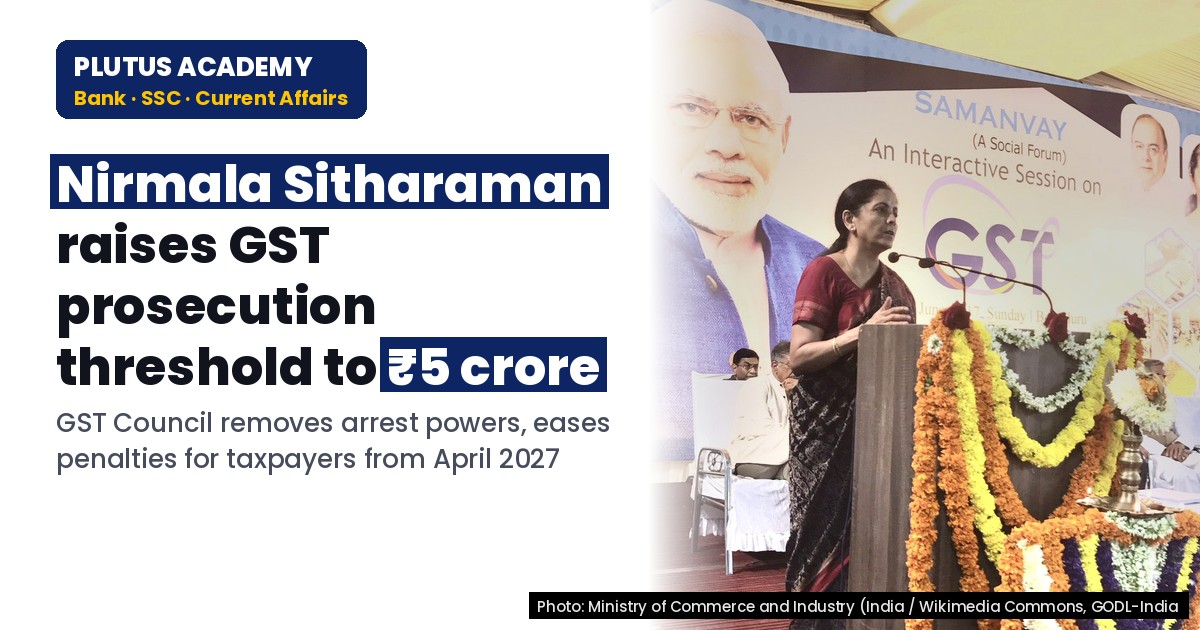
The 57th GST Council meeting, chaired by Finance Minister Nirmala Sitharaman, has announced significant relief for taxpayers by abolishing the arrest power of GST officials and raising the prosecution threshold from ₹1 crore to ₹5 crore, effective April 1, 2027. Additionally, the general penalty for minor offenses has been reduced from ₹25,000 to ₹10,000, and no notices will be issued for amounts below ₹10,000. The Council also introduced automated refunds, extended refunds under the inverted duty structure to input services, and proposed faceless tax assessments for multi-state CGST taxpayers. These measures aim to simplify compliance, reduce harassment, and foster a more taxpayer-friendly environment.
For banking and SSC aspirants, this decision highlights the government’s focus on ease of doing business and tax simplification, a key theme in economic governance. RBI Grade B candidates should note how such reforms impact revenue collection, fiscal policy, and indirect tax administration, which are crucial for understanding macroeconomic stability. The move also underscores the GST Council’s role in balancing revenue protection with business facilitation, a concept relevant to financial sector policies and regulatory frameworks.
Source: orissapost.com
Generated by AanyaAi for educational purpose.

2 comments on “GST Council removes arrest power, raises prosecution threshold to ₹5 crore”