
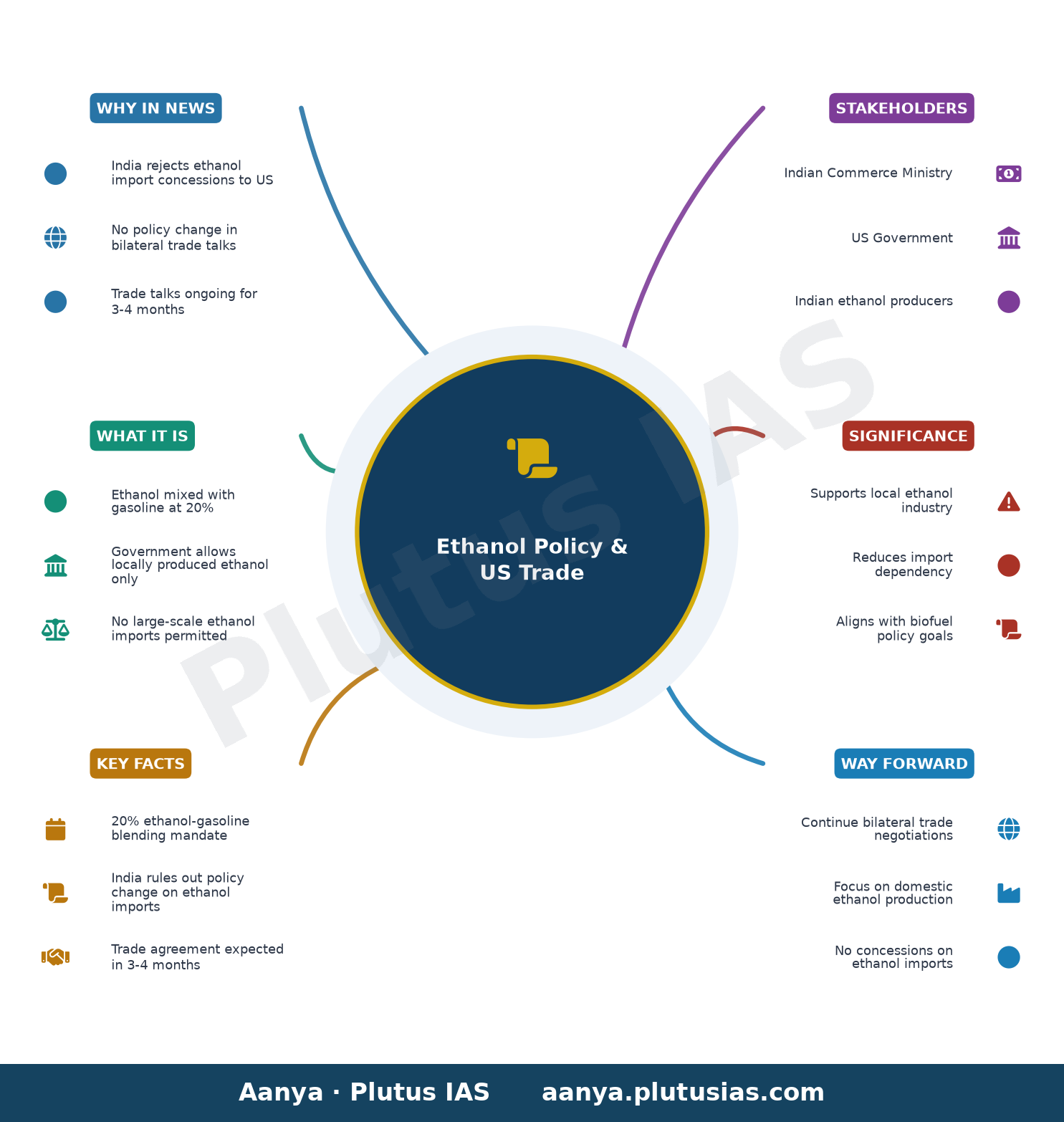
✎ India maintains 20% ethanol-gasoline mandate, rejecting US import concessions to prioritize domestic ethanol production and trade policy autonomy.
Relevance for Banking, SSC & RBI Grade B exams: Polity & Governance
India has firmly rejected any concessions on ethanol imports from the U.S. during ongoing bilateral trade talks, emphasizing that no policy changes are being considered to allow large-scale fuel ethanol imports. The Commerce Ministry clarified that India’s ethanol blending mandate, which requires a 20% mix with gasoline, is currently met through domestically produced ethanol, and there are no plans to alter this stance. This decision comes amid negotiations for a potential trade agreement, which U.S. officials suggest could be finalized within three to four months, aimed at enhancing market access and reducing trade barriers between the two nations.
For banking and SSC aspirants, this development highlights the importance of understanding India’s trade policies and their economic implications, particularly in sectors like energy and agriculture. The ethanol blending mandate is a key policy under India’s push for cleaner fuels and self-reliance, which could impact sectors such as banking through investments in biofuel infrastructure or subsidies. For RBI Grade B candidates, this underscores the role of trade agreements in shaping monetary and fiscal policies, as well as the need to monitor global trade dynamics that influence India’s economic stability and inflation trends.
Source: Mint
Generated by AanyaAi for educational purpose.
