
Relevance for Banking, SSC & RBI Grade B exams: Polity & Governance
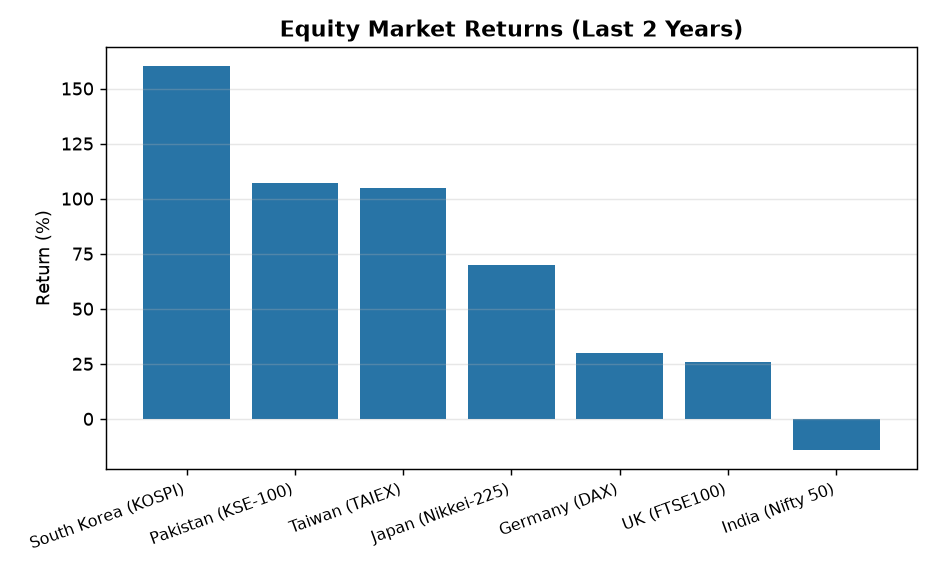
India’s equity market has recently shown a concerning underperformance, with the Nifty 50 returning minus 14% over the last two years, starkly contrasting with significant gains in other global markets like South Korea, Pakistan, Taiwan, and even struggling European economies. This weakness is attributed to a combination of factors including taxation, regulatory uncertainty, liquidity constraints, the cost of capital, corporate earnings pressures, and the volatile priorities of international investors. The sudden infusion of ₹15,000 crore after the U.S. midterm election results should not overshadow the fundamental policy question of whether India’s investment policy environment has become increasingly difficult for global capital to navigate, ultimately hurting the economy.
For aspirants of Bank PO, IBPS, SBI, RBI Grade B, and SSC exams, understanding this issue is crucial for Polity & Governance. It highlights the direct impact of government policy decisions, particularly on taxation and regulatory frameworks, on investor confidence and economic growth. This knowledge is essential for questions related to economic policy, financial markets, and India’s position in the global economy, directly relevant to general awareness, economic affairs, and descriptive papers in these competitive examinations.
Source: The Hindu
Generated by AanyaAi for educational purpose.

2 comments on “India’s Equity Market: Taxation & Policy Impact on Investors”