
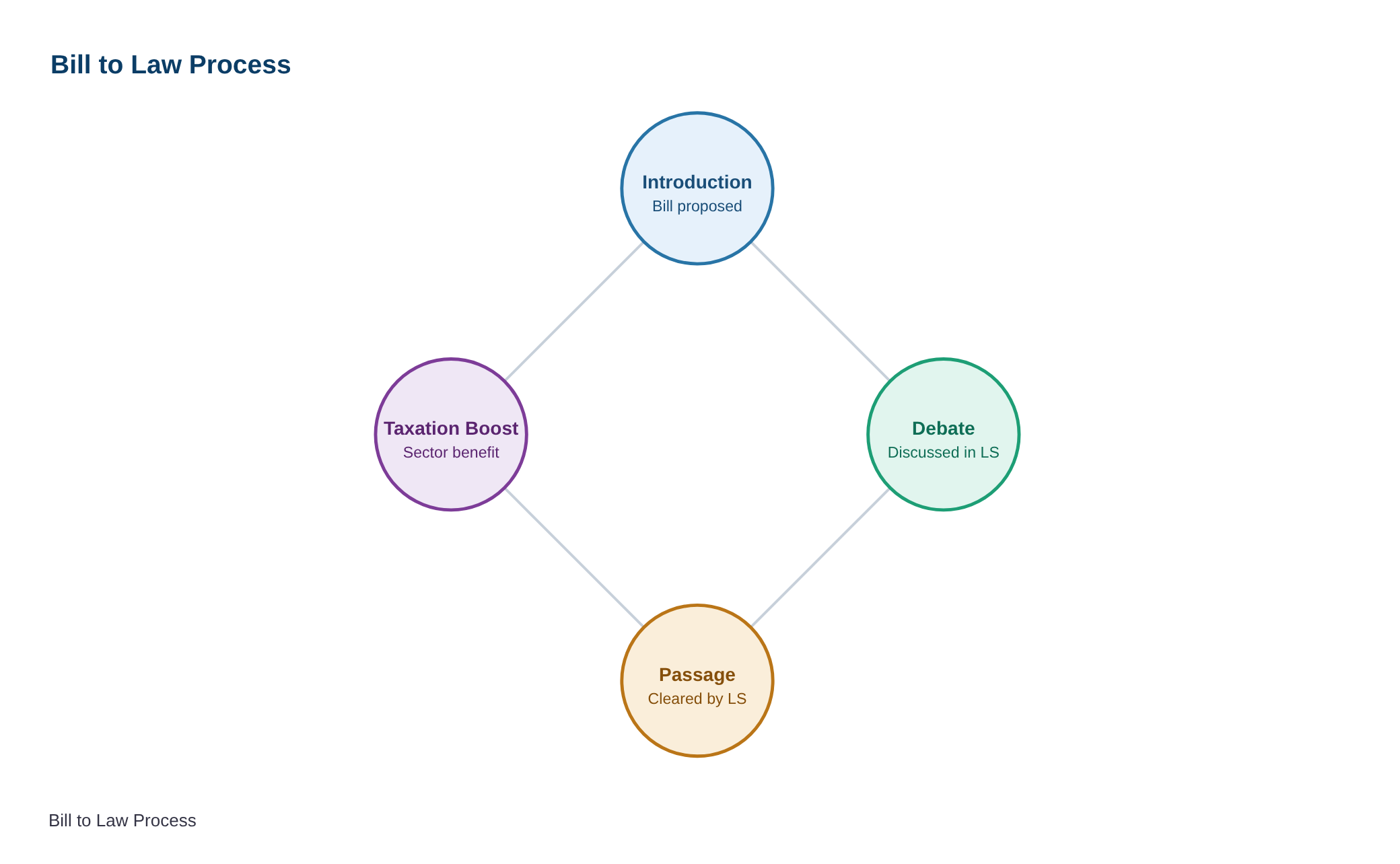
✎ Taxation amendment bill for data centres cleared by Lok Sabha to boost digital infrastructure and investment.
Relevance for Banking, SSC & RBI Grade B exams: Polity & Governance
The Lok Sabha’s clearance of the taxation amendment bill has provided a significant policy boost to India’s data centre sector, addressing long-standing concerns over tax incentives and regulatory clarity. The amendment, aimed at rationalising the Goods and Services Tax (GST) framework, introduces provisions to exempt data centre infrastructure from certain levies, reducing operational costs and enhancing competitiveness. This move aligns with the government’s broader push to position India as a global hub for digital infrastructure, attracting investments in high-speed connectivity and cloud computing. For banking and financial services aspirants preparing for exams like IBPS, SBI, and RBI Grade B, understanding such policy shifts is crucial, as they directly influence sectoral growth, credit demand, and digital transformation trends in the economy.
For SSC aspirants, the development underscores the interplay between governance and economic policies, a recurring theme in exams covering polity and governance. The amendment’s focus on tax rationalisation and sector-specific incentives reflects the government’s intent to streamline business operations, a topic often tested in descriptive papers or group discussions. Additionally, RBI Grade B candidates should note how such policies can impact financial stability, digital payment ecosystems, and the Reserve Bank’s regulatory oversight of fintech and data security. The data centre sector’s growth also ties into broader themes like cybersecurity, data localisation, and India’s self-reliance in technology, making it a relevant case study for aspirants across competitive exams.
Source: Business Standard
Generated by AanyaAi for educational purpose.
