✎ PLI scheme under bulk drugs aims to boost domestic API production, reduce imports, and enhance pharma self-reliance with 5,070.45 crore investment.
Relevance for Banking, SSC & RBI Grade B exams: Polity & Governance
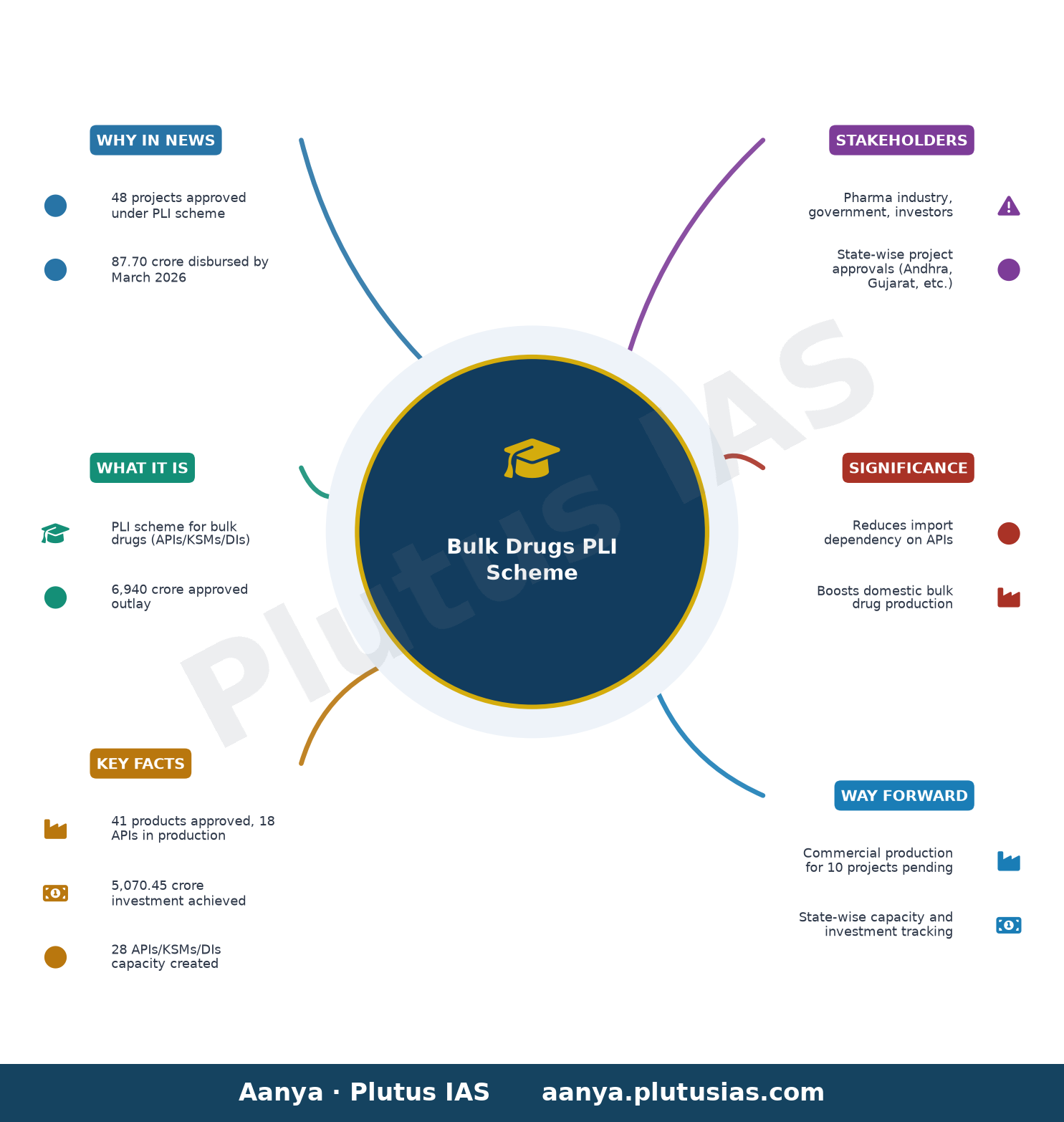
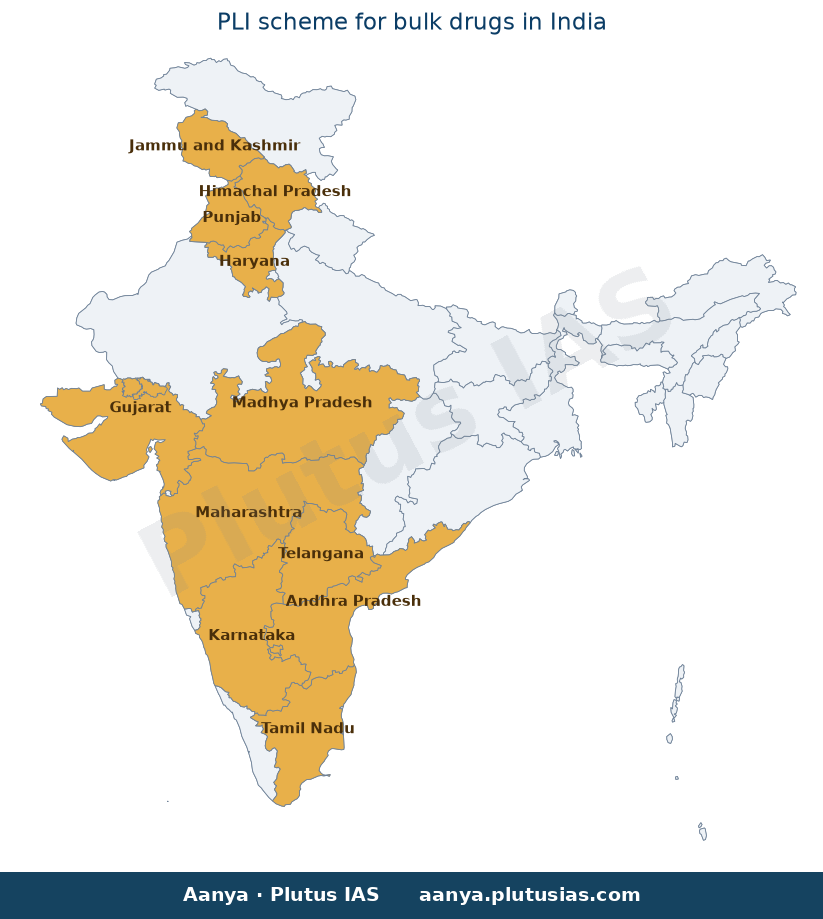
The Press Information Bureau (PIB) has approved 48 projects under the Production-Linked Incentive (PLI) Scheme for Bulk Drugs, aimed at boosting domestic production of Key Starting Materials (KSMs), Drug Intermediates (DIs), and Active Pharmaceutical Ingredients (APIs). With a sanctioned outlay of ₹6,940 crore, the scheme has disbursed ₹87.70 crore in incentives by March 2026, while generating production capacity for 28 APIs/KSMs/DIs. Notably, 18 critical APIs—including penicillin G, dexamethasone, and atorvastatin—have already entered commercial production, reducing India’s reliance on imports. The scheme has attracted total investments of ₹5,070.45 crore against a committed ₹4,329.95 crore, with states like Andhra Pradesh, Gujarat, and Maharashtra leading in project approvals and investments.
This initiative aligns with broader economic goals of self-reliance (*Atmanirbhar Bharat*) and aligns with the government’s focus on pharmaceutical self-sufficiency. For banking and SSC aspirants, understanding such schemes is crucial as they reflect policy-driven economic reforms impacting sectors like healthcare and manufacturing. RBI Grade B candidates should note how such PLI schemes influence inflation control, fiscal deficit management, and sectoral credit growth, as they often feature in descriptive questions on monetary policy or economic surveys.
Source: PIB (Press Information Bureau)
Generated by AanyaAi for educational purpose.
