✎ Punjab’s education transformation highlights infrastructure upgrades, foundational learning programs, and AI integration as key drivers for top NITI Aayog rankings.
Relevance for Banking, SSC & RBI Grade B exams: Economy/Governance
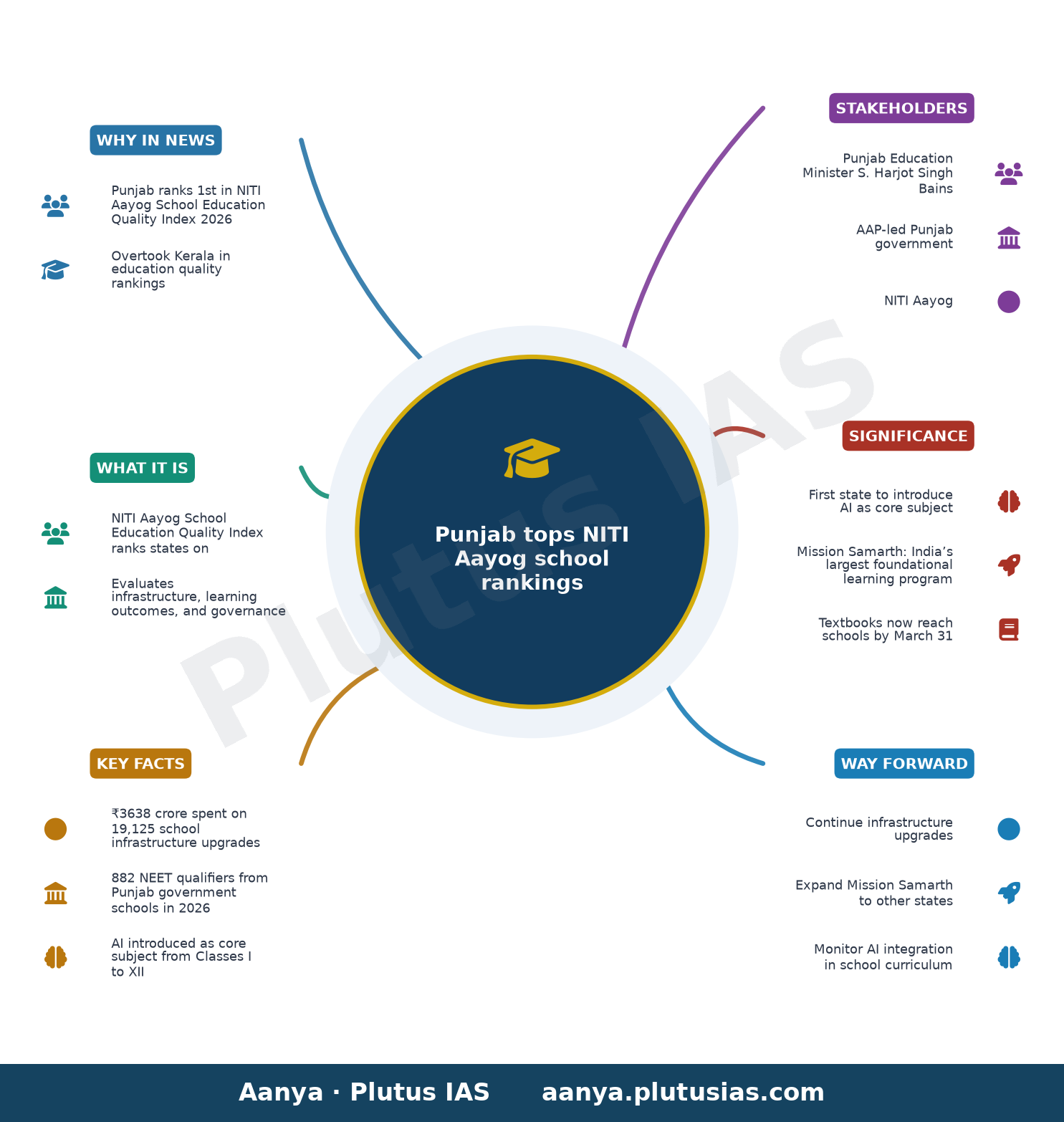
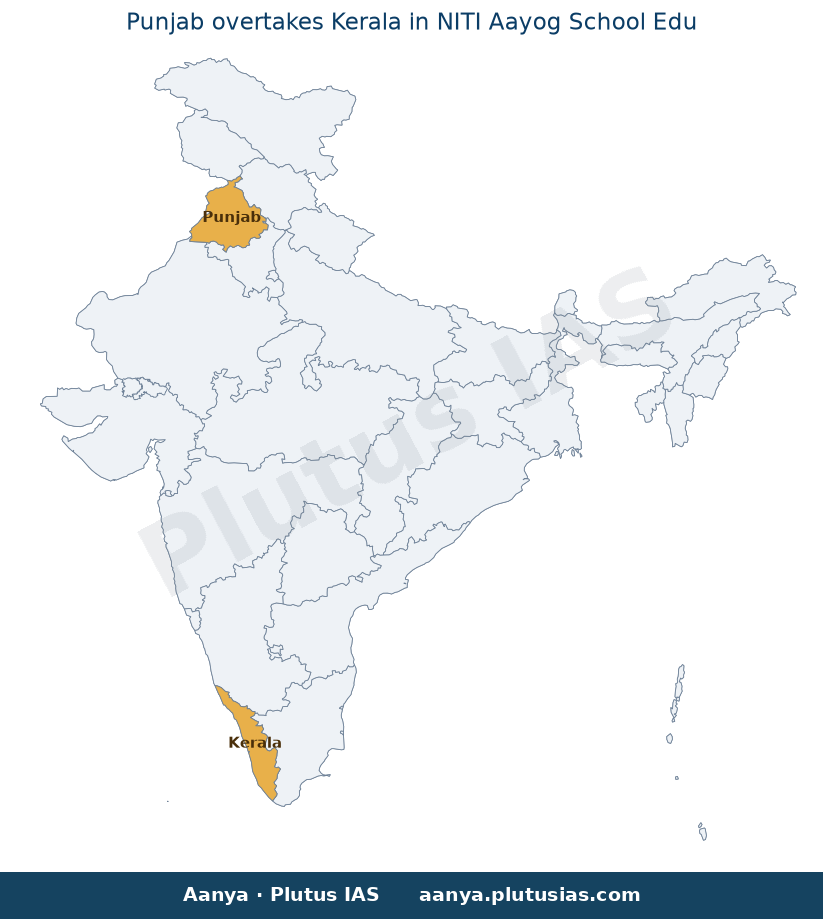
Punjab’s recent achievement in overtaking Kerala to rank first in NITI Aayog’s School Education Quality Index 2026 highlights the state’s transformative initiatives in school education, making it a critical case study for aspirants preparing for banking, SSC, and RBI Grade B exams. The report underscores Punjab’s focus on foundational learning through its ‘Mission Samarth’ programme, which groups students by learning ability rather than grade, alongside infrastructure upgrades worth ₹3,638 crore in 19,125 schools. Such reforms reflect the government’s commitment to improving human capital, a key economic indicator that directly impacts workforce productivity—a topic often tested in these examinations. Additionally, the surge in NEET qualifiers from government schools (from 80 in 2021 to 882 in 2026) demonstrates the success of schemes like ‘PACE’, which could be relevant for questions on government schemes or economic development in competitive exams.
For banking and SSC aspirants, Punjab’s model of educational reform offers insights into governance efficiency and public expenditure priorities, often asked in descriptive or analytical sections. RBI Grade B candidates, who focus on economic policies and social sector developments, may find this case useful for understanding how state-led interventions can bridge gaps in education quality, a factor influencing long-term economic growth. The emphasis on AI integration in school curricula and the World Bank-funded upgrades further underscore the state’s innovative approach, which could be linked to broader themes like digital literacy or sustainable development in exam syllabi.
Source: The Hindu
Generated by AanyaAi for educational purpose.
