Relevance for Banking, SSC & RBI Grade B exams: Economy
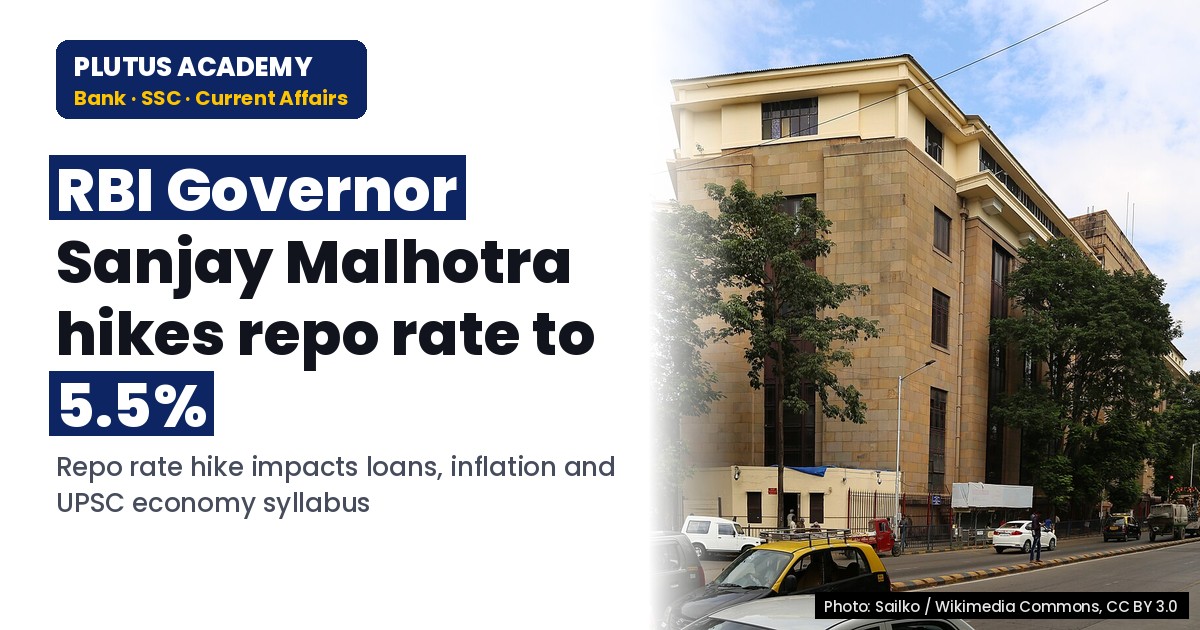
The Reserve Bank of India (RBI) raised the repo rate by 25 basis points to 5.5% on October 7, 2026, marking its first hike in nearly three-and-a-half years, driven by rising inflation amid the West Asia crisis. This decision reverses the previous rate-cut cycle that began in 2025, with the last hike occurring in February 2023. The MPC also shifted its stance to ‘calibrated tightening’ from ‘neutral’, signaling a cautious approach to inflation control, while retail inflation rose to 4.82% in August. The move aligns with global trends, as the US Federal Reserve and European Central Bank also raised rates in recent months to combat inflation fueled by surging oil prices.
For banking and SSC aspirants, this policy shift is crucial as it impacts loan EMIs, borrowing costs, and monetary policy frameworks. RBI Grade B candidates must understand the implications of repo rate hikes on liquidity, inflation targeting, and the MPC’s decision-making process. Questions on monetary policy tools, inflation dynamics, and their effects on the economy are likely in these exams, making this update a key topic for current affairs preparation.
Source: orissapost.com
Generated by AanyaAi for educational purpose.
