
✎ Kishau Project resolves 40-year water dispute, benefits 6 states with irrigation, hydropower, and water supply under national project funding.
Relevance for Banking, SSC & RBI Grade B exams: Polity & Governance
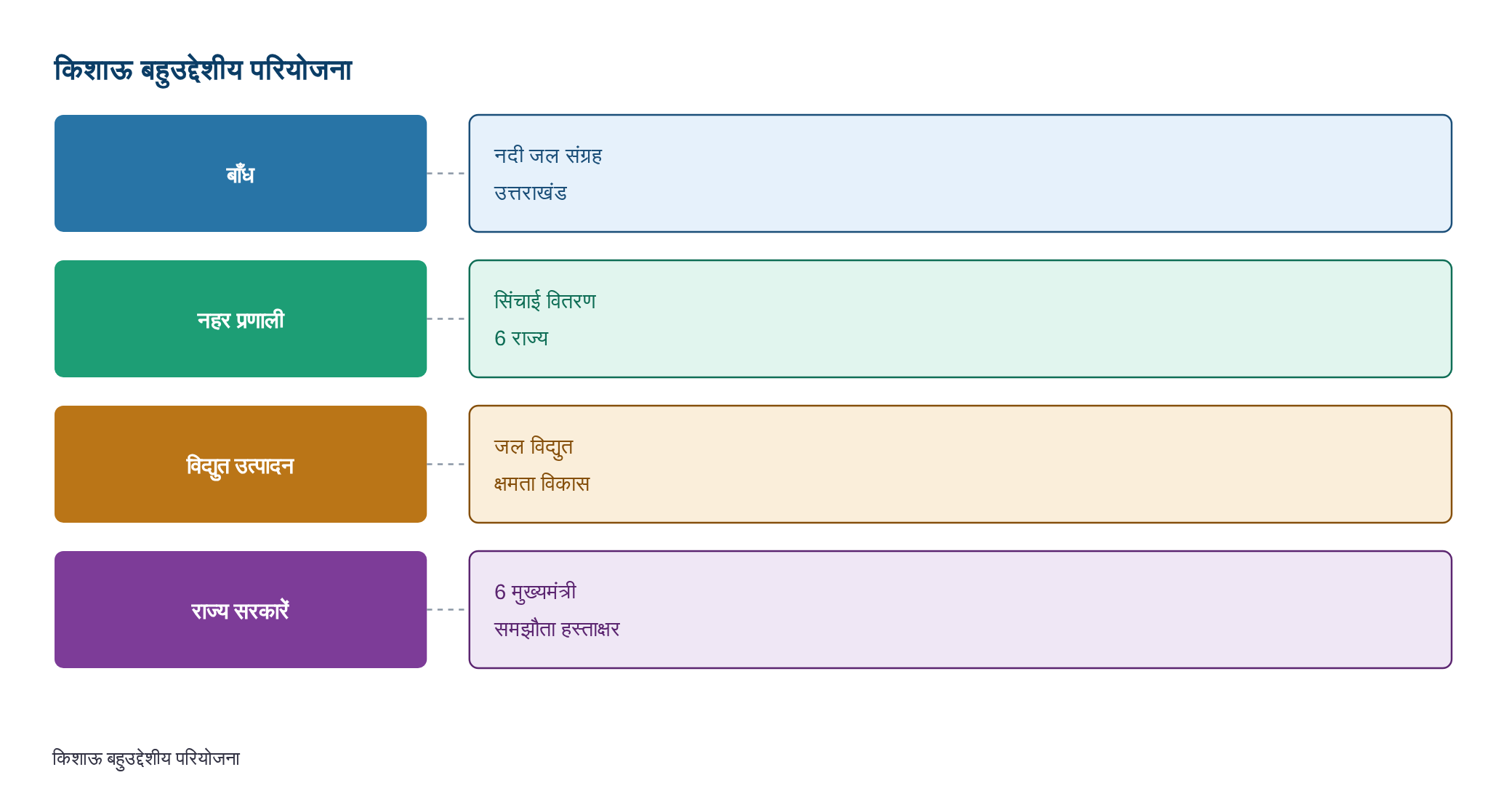
The recent signing of the Kishau Multipurpose Project Agreement by the Chief Ministers of Uttar Pradesh, Uttarakhand, Himachal Pradesh, Rajasthan, Delhi, and Haryana, in the presence of Union Home and Cooperation Minister Amit Shah and Union Jal Shakti Minister C.R. Patil, marks a significant milestone in resolving long-standing inter-state water disputes. This agreement reflects the Modi government’s commitment to cooperative federalism, as outlined in the principles of “sabka saath, sabka vikas, sabka vishwas, and sabka prayas,” and aligns with the PM’s vision of “dialogue for resolution.” The Kishau project, declared a national initiative, will address water scarcity, enhance irrigation, and generate clean hydropower, benefiting millions across the Yamuna basin. Its completion will also strengthen environmental conservation efforts, particularly for Delhi and the Yamuna river, while ensuring equitable water distribution among the participating states.
For aspirants preparing for banking, SSC, and RBI Grade B examinations, this development holds relevance in understanding inter-state cooperation, federal governance, and national projects. Questions may arise on the role of central ministries like Jal Shakti in resolving disputes, the financial structure of national projects (90% central funding), and the socio-economic benefits of multipurpose dams. Additionally, the Kishau project’s focus on sustainable water management and renewable energy aligns with broader themes of environmental governance and infrastructure development, which are frequently tested in competitive exams. The agreement also highlights the importance of cooperative federalism—a key governance concept in polity and governance sections.
Source: PIB (Press Information Bureau)
Generated by AanyaAi for educational purpose.

1 comment on “Six States Sign Kishau Multipurpose Project Agreement: Key Facts for Exams”