
✎ OBC creamy layer policy revision awaits SC order on Centre's two-year implementation plea.
Relevance for Banking, SSC & RBI Grade B exams: Polity & Governance
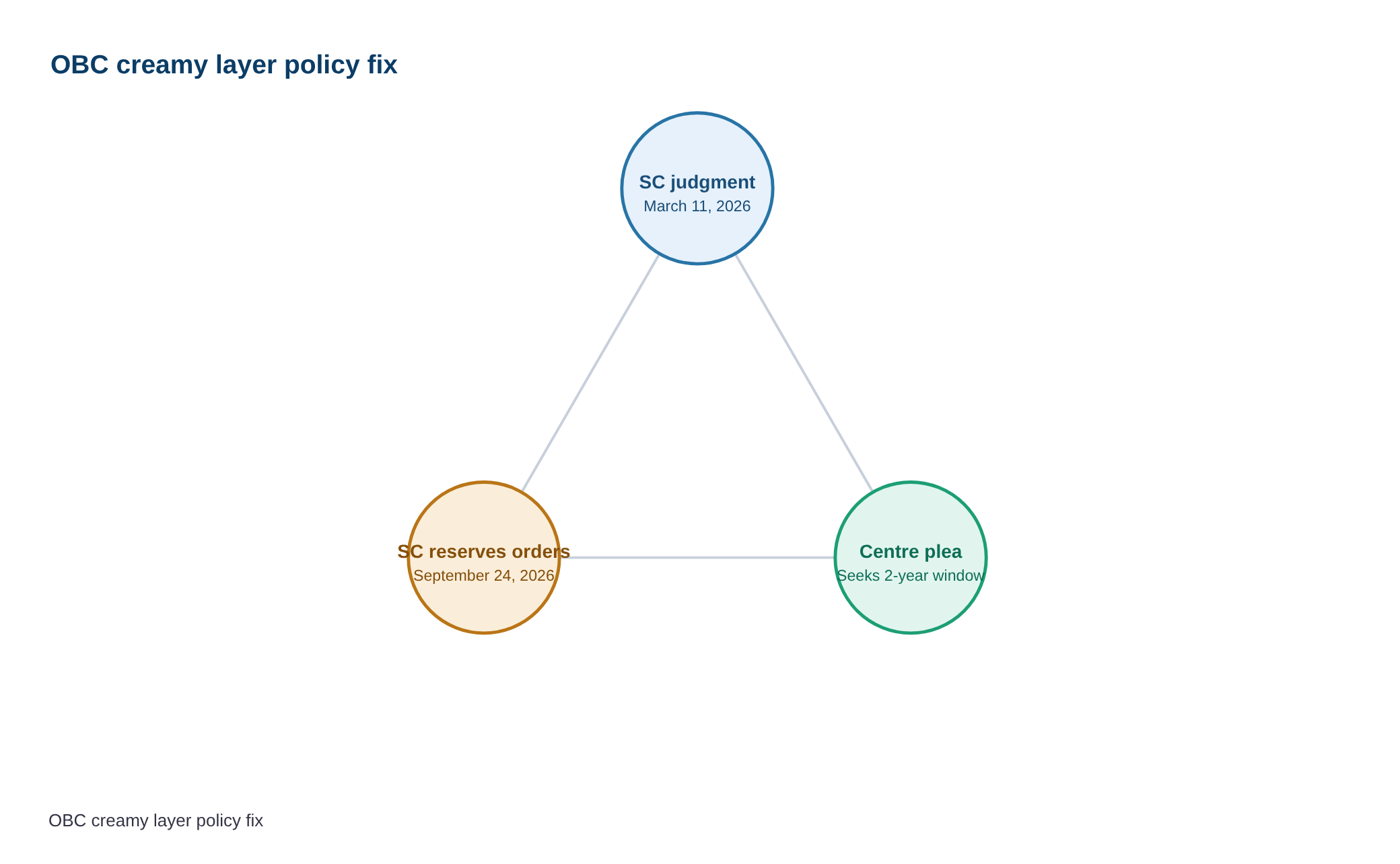
The Supreme Court on September 24, 2026, reserved orders on the Union government’s plea seeking a two-year window for prospective implementation of its March 11, 2026 judgment on the OBC creamy layer policy. The Centre, represented by Solicitor General Tushar Mehta, argued that a retrospective application would disrupt ongoing recruitment processes, service allocations, seniority, and admissions across sectors like railways, banks, postal services, and paramilitary forces, affecting lakhs of candidates. The government contended that the judgment’s retrospective enforcement could lead to administrative chaos and unintended consequences, citing the need for a uniform policy to re-assess OBC non-creamy layer status under the 1993 Office Memorandum, which excludes parental salary and agricultural income from the income test.
This legal tussle holds significant relevance for banking and SSC aspirants, as OBC reservations impact recruitment eligibility and cadre allocations in public sector entities like banks, where OBC quotas are strictly followed. For RBI Grade B candidates, understanding the policy’s nuances is crucial, given the central bank’s role in overseeing recruitment and service conditions for financial institutions. The Supreme Court’s eventual decision could redefine OBC reservation norms, influencing future recruitment cycles and policy frameworks, making it a critical topic for exam preparation.
Source: The Hindu
Generated by AanyaAi for educational purpose.

1 comment on “Supreme Court to Decide on OBC Creamy Layer Policy: Impact on Recruitment & Reservations”