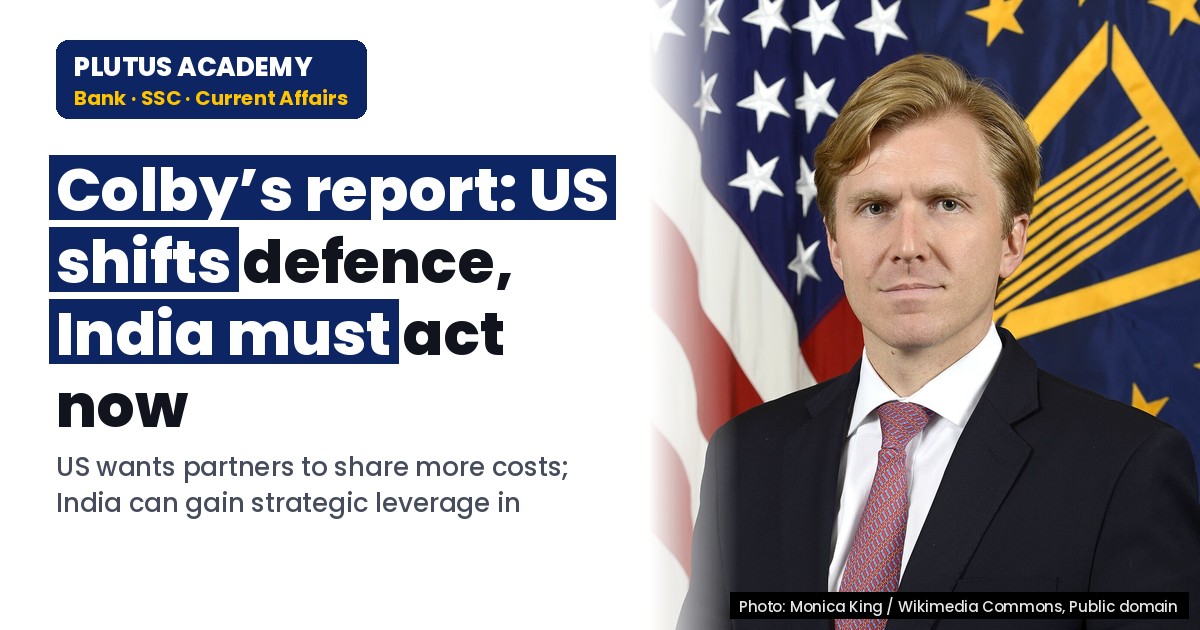
✎ The 2026 U.S. National Defense Strategy shifts focus to burden-sharing with allies like India, emphasizing regional security contributions and deterring China.
Relevance for Banking, SSC & RBI Grade B exams: Economy/Governance
Colby’s mid-term report card, published in *The Hindu* on October 5, 2026, highlights the evolving U.S. defence strategy under the Trump administration, which emphasizes greater burden-sharing with regional allies like India. The report underscores Washington’s shift from solely providing security to expecting partners to contribute more troops, funding, and industrial support, particularly in the Indo-Pacific. For banking and SSC aspirants preparing for exams like RBI Grade B or IBPS, this reflects the growing importance of strategic alliances in global governance, a key topic in economy and international relations sections. The report’s focus on India’s role in deterring China and maintaining regional stability aligns with current affairs questions on geopolitical shifts, making it relevant for understanding India’s economic and defence priorities in competitive exams.
The mid-term assessment also signals that India’s strategic autonomy and leverage in negotiations with the U.S. will depend on its economic and military capabilities. For banking exams, this ties into questions on India’s foreign policy, trade dynamics, and defence partnerships, while SSC aspirants may encounter it in governance or current affairs segments. The report’s emphasis on India’s partnerships with France, Japan, and Australia further highlights the need for aspirants to stay updated on multilateral alliances, a frequent theme in exams like SBI PO or RBI Grade B. Understanding these nuances can help candidates frame answers on India’s evolving role in global security frameworks.
Source: The Hindu
Generated by AanyaAi for educational purpose.

2 comments on “US Defence Strategy Shift: Implications for India’s Strategic Leverage”