
✎ CURE Bill 2026 faces scrutiny for governance flaws, reduced local autonomy, and constitutional concerns.
Relevance for Banking, SSC & RBI Grade B exams: Polity
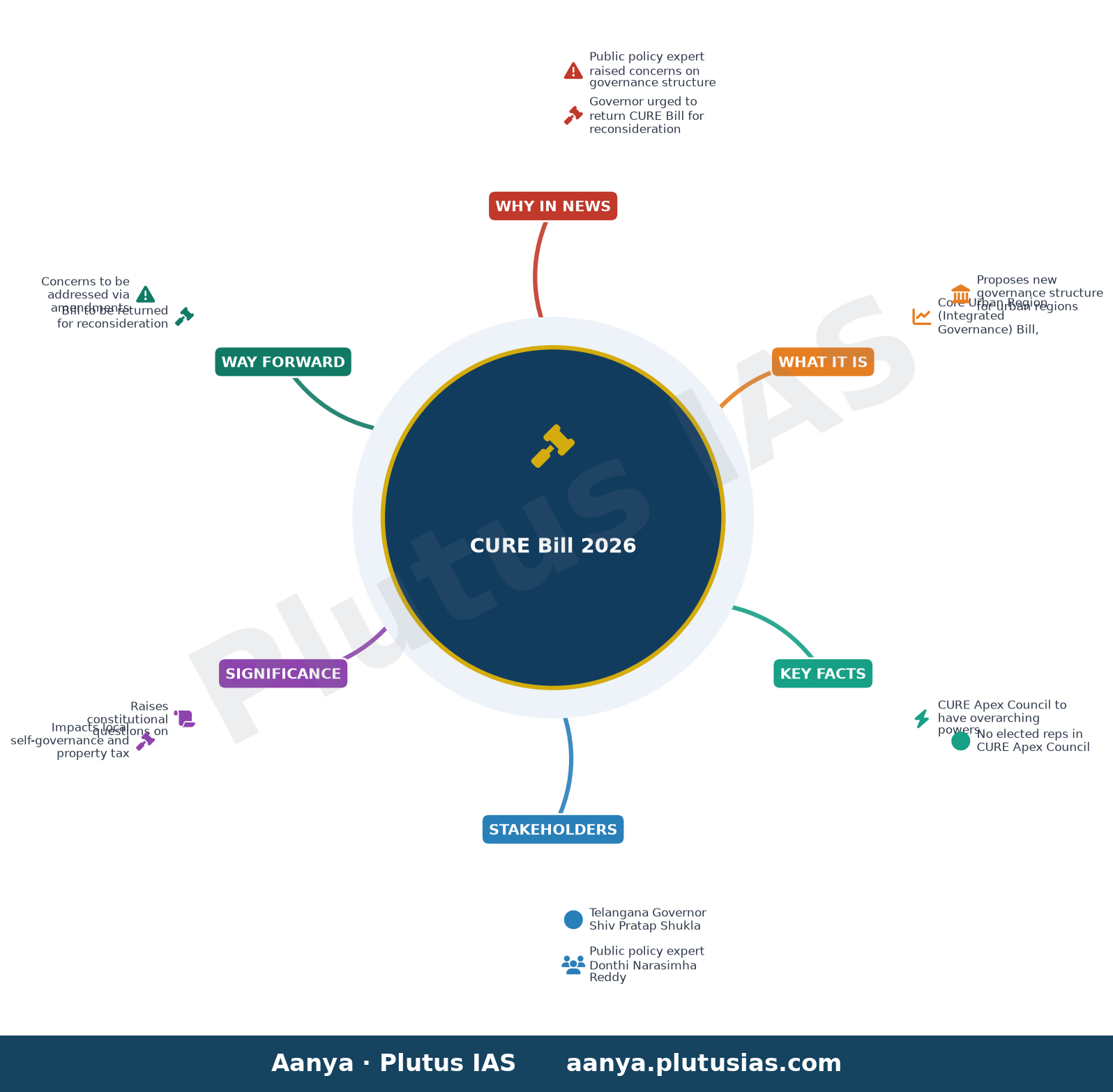
A public policy expert has urged Telangana Governor Shiv Pratap Shukla to return the Core Urban Region (Integrated Governance) Bill, 2026, to the State Assembly for reconsideration, citing concerns over its governance structure, powers of newly created bodies, and provisions related to property tax. The expert, Donthi Narasimha Reddy, highlighted issues such as the absence of elected representatives in the proposed CURE Apex Governance Council, which could raise constitutional questions, and the lack of safeguards in property tax assessment and appeals. These concerns are particularly relevant for banking and SSC aspirants preparing for exams like IBPS PO and RBI Grade B, as they underscore the importance of constitutional governance, fiscal policies, and administrative reforms in shaping economic policies and public administration.
The Bill’s provisions allowing CURE authorities to exercise powers beyond the Core Urban Region and reducing the statutory rights of ward committees further complicate its implementation, raising questions about local self-governance and accountability. For RBI Grade B and SSC aspirants, this highlights the need to understand the interplay between state legislation, constitutional provisions, and economic governance, which can influence fiscal federalism and public finance management. The Governor’s role in scrutinizing such Bills also reflects the checks and balances in India’s democratic system, a key topic in polity and governance sections of competitive exams.
Source: The Hindu
Generated by AanyaAi for educational purpose.
